
Handwriting is the act of writing with a pen or pencil that humans have used for thousands of years, but in recent times has declined due to the rise of technology. Today we will be discussing whether handwriting or typing is better for memory retention.
Research consistently shows that handwriting is more effective than typing for memory retention and conceptual understanding. The slower process forces your brain to summarize and rephrase information. This engages deeper cognitive processing. It activates wider neural networks and strengthens memory encoding, especially in the brain’s hippocampus.
A study done by the European Medical Journal showed that focus increases when writing with a pen. Brain electrical activity is significantly enhanced. This research suggests that the physical act of writing by hand engages different neural pathways, which not only boosts concentration but also fosters a deeper understanding of the material being written. Studies have shown that in lectures, students who take notes by hand are better able to grasp complex ideas, whereas typists tend to focus on recording every word without processing it. Additionally, the physical act of forming letters provides tactile and spatial feedback, which helps create stronger memory traces in the brain and boost memory skills and memory
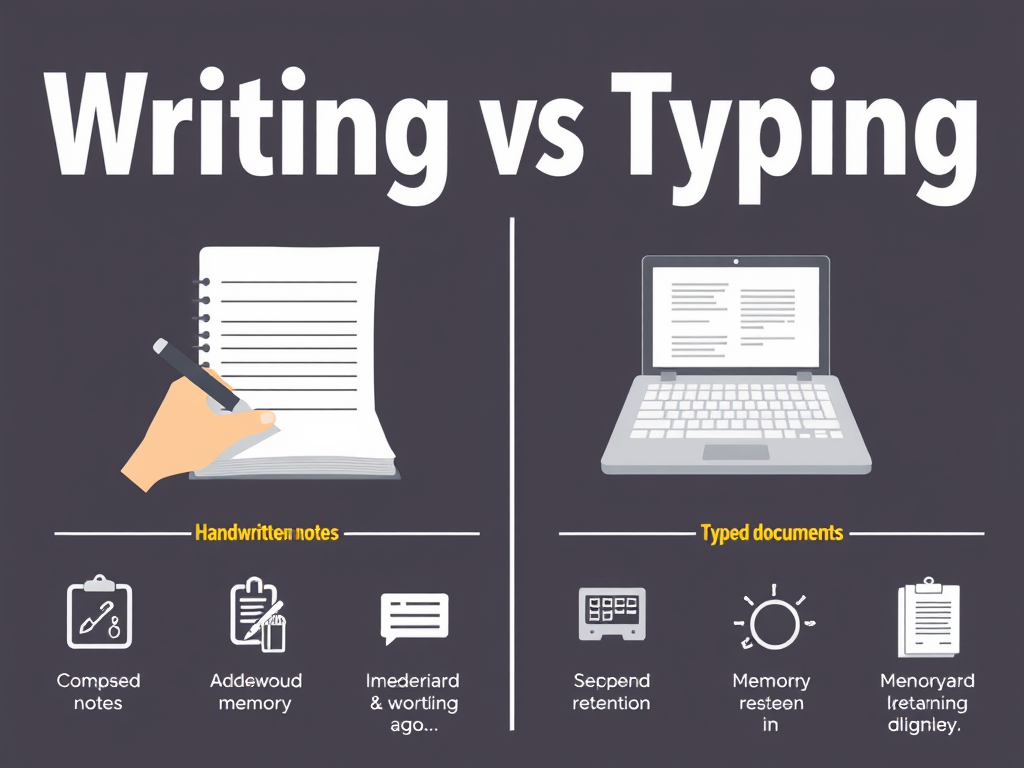
However, typing can also boost memory. Touch typing engages muscle memory, reducing the cognitive effort required to form letters and allowing the brain to focus on organizing, analyzing, and remembering content and frees up memory for higher order tasks.

Overall, studies indicate that handwriting engages a greater number of neural circuits—motor, sensory, and visual—than typing, resulting in enhanced conceptual understanding and recall. Typing is generally regarded as a more “passive” activity, while writing by hand involves a more “active” cognitive process. Although typing facilitates working memory by allowing for the rapid capture of information, research suggests it is less effective for long-term retention when compared to the deeper, multisensory engagement achieved through handwriting.
 Learning Logs: One Student's Adventures in Learning
Leave a comment